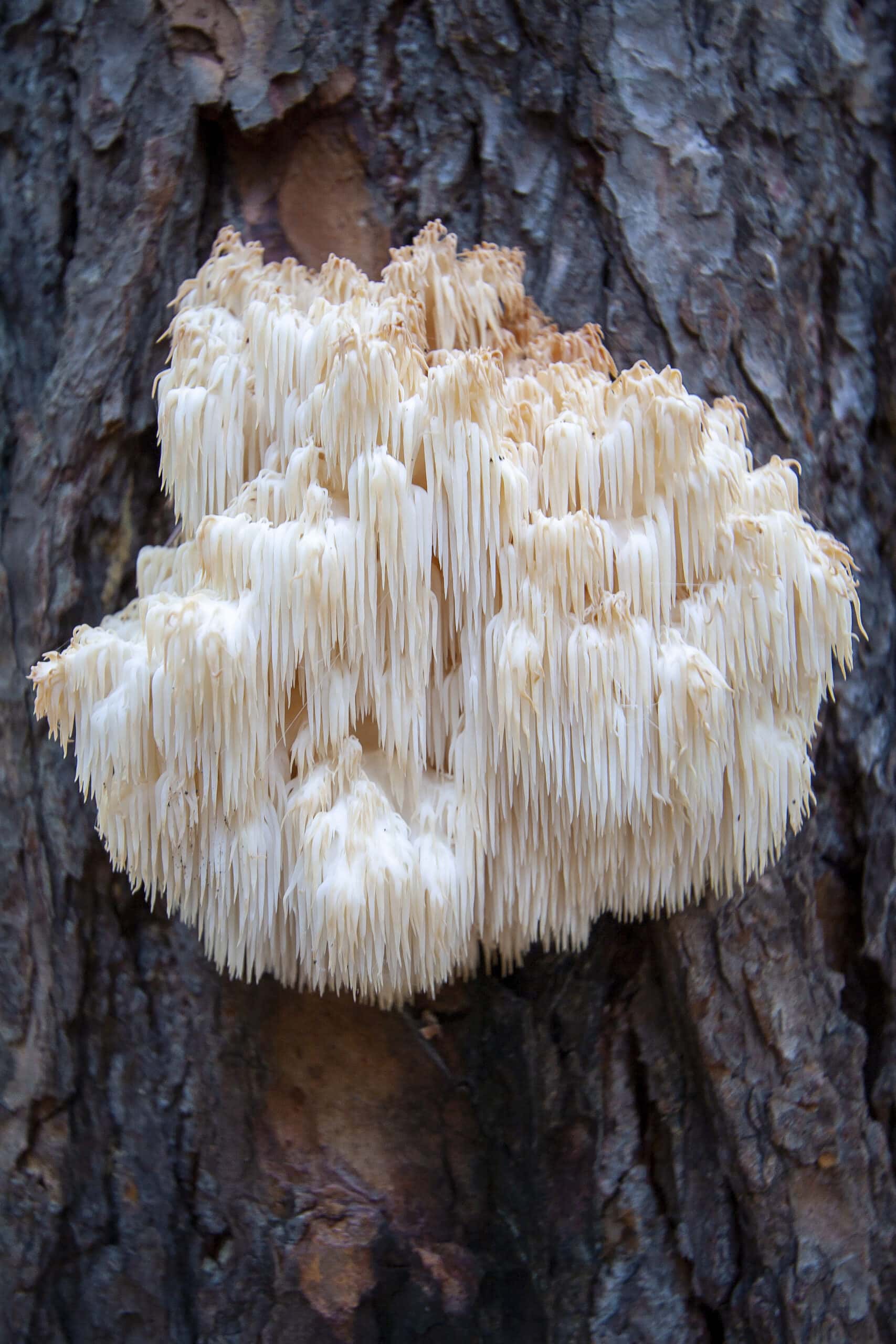
Lion's Mane (Hericium erinaceus) known as Pruikzwam in Dutch , is a distinctive medicinal mushroom that has been used for centuries in traditional medicine, especially in Asia. This mushroom, with its lush white mane, has not only a distinctive appearance, but also an impressive array of potential health benefits, especially for the brain and nervous system.
In this article, we will elaborate on the relationship between Lion's Mane and its impact on cognitive functions, nervous health and general well-being.
Lion's Mane: The basics
So what makes Lion's Mane so extraordinary? It is the ericenones and erinacins, specific alkaloids found in Lion's Mane, that prompt the body to produce NGF, or nerve growth factor. NGF is essential for the growth of certain neurons in our brain and also plays a crucial role in the process of myelination, which ensures efficient signal transmission through nerve cells.
Lion's Mane neuropeptides are responsible for the growth, maintenance and proliferation of neurons and myelin in the brain. This specialised protein is required for the growth of sensory neurons in our brain. In short, it stimulates the brain.
They play an essential role in the differentiation and survival of different nerve cell populations in the peripheral and central nervous system.
Lion's Mane and the Brain
- Promotion of Neuroplasticity
Neuroplasticity refers to the brain's ability to adapt and change even as we age. Lion's Mane is being investigated for its possible role in promoting neuroplasticity. Studies suggest that Lion's Mane may stimulate certain growth factors in the brain, such as brain-derived neurotrophic factor (BDNF). This factor is crucial for the growth, survival and differentiation of neurons. Increased levels of BDNF are associated with improved cognitive function and the brain's ability to form new connections.
- Improving Memory and Cognitive Functions
Several studies have shown that Lion's Mane can potentially improve cognitive functions, including memory and concentration. It has the ability to boost cognitive functions such as memory and concentration and support the NGF (Nerve Growth Factor) growth of nerve cells / neurons.
- Protection against Neurodegenerative Diseases
There is also interest in Lion's Mane because of its potential neuroprotective properties. Some studies suggest that Lion's Mane may offer protection against neurodegenerative diseases such as Alzheimer's and Parkinson's disease. It is believed to work by reducing inflammation, reducing oxidative stress and stimulating nerve growth.
Lion's Mane and the Nervous System
- Supporting nerve regeneration
Lion's Mane promotes the process of myelination. This is the process of signal transmission through the nerves, which Lion's Mane has been shown to speed up. The nervous system plays a crucial role in the body by transmitting signals between the brain and other parts of the body. Lion's Mane is being investigated for its possible ability to support the regeneration of nerve cells. This property may be relevant for people recovering from nerve injuries or neuropathy.
- Reduction of Inflammation of the Nervous System
Taking a closer look at Lion's Mane reveals fascinating components such as β-glucans and polysaccharides, including hericenones and erinacin. These compounds exhibit remarkable anti-inflammatory properties and contribute to the stimulation of nerve growth factor (NGF) in nerve cells.
This is of particular importance because chronic inflammation of the nervous system can cause serious conditions such as multiple sclerosis (MS) and other autoimmune diseases. While more research is needed to fully understand these effects, current findings suggest a potentially promising role for Lion's Mane in supporting nervous system health.
Moreover, recent research indicates the potential of Lion's Mane in the treatment and prevention of neurodegenerative diseases such as Alzheimer's and Parkinson's. Remarkably, the use of Lion's Mane is well tolerated and generally does not cause any adverse side effects. Together, these properties make Lion's Mane a fascinating subject of study and research in the context of neurological health.
Conclusion
Lion's Mane, with its impressive potential for promoting neuroplasticity, improving cognitive functions and supporting nerve health, is an exciting mushroom with promising brain and nervous system benefits. While further research is needed to understand the full scope of these benefits, centuries of use in traditional medicine and recent scientific studies have certainly piqued our interest in Lion's Mane.
We would like to inform you of our policy regarding claims about medicinal properties of herbs and mushrooms on our website. Current EU legislation prohibits making such claims. Although traditional Chinese medicine has been around for thousands of years and has been tested on countless patients, we are not allowed to mention effects confirmed by scientific research. However, we rely on the common sense of our customers and detailed information on mushrooms can be found through public sources on the internet.